











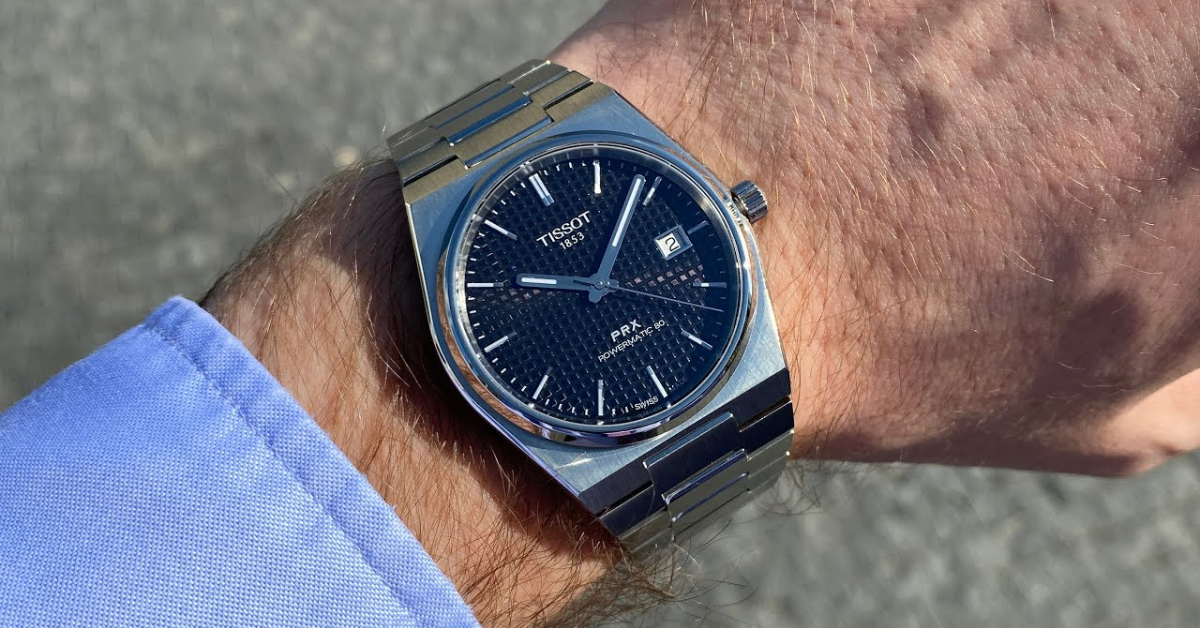
A watch is sometimes more than a timekeeper. It becomes a component of style and identity. The Tissot PRX Watch is one of those rare ones. Its slender profile, along with the integral bracing, allowed modern sports elegance decades ago. Today, the design still has a fresh and relevant feel to it.
Many collectors admire its clean case lines and balanced dial design. New buyers also prefer it for the comfort of daily wear. This powerful appeal is based on a thoughtful story that began in the late 70s. Understanding that story helps one understand why the model is so popular through the generations.
The Creation of a Design Classic 1978
The roots of the Tissot PRX Watch can be traced to a daring moment in the history of watch design. In 1978, Tissot presented a sleek quartz watch with a flat barrel-shaped case. It was consistent with the lifestyle of a changing generation. Quartz watches were at that time gaining attention. Brands needed new ideas in order to remain competitive. Tissot responded with a design that was both accurate and beautiful.
This period was the beginning of the Tissot PRX 1978 history. The model consisted of an integrated bracelet and a narrow bezel. These details gave the watch a unified look that still characterizes the watch today. The name PRX also had a meaning. The letters were the initials for qualities of precision and sturdiness. The X symbol indicated the resistance to water up to a pressure of ten bar. This combination made the watch practical and stylish.
Design Features That Distinguished the Tissot PRX Watch
The original version provided a strong identity that gave it a separation from the typical watches. Its slender case made it comfortable for daily wear. The bracelet smoothly flowed into the edges of the cases. The layout of the dials was simple and balanced. Hour markers remained clear and readable. The clean design helped the watch to suit a casual or formal environment.
It is often these details that collectors refer to when talking about the early Tissot PRX origin. The watch embodied the spirit of the times but was not too large or decorative. Many integrated bracelet watches emerged in the late 1970s. Few enjoyed lasting popularity as much as this one. That success demonstrated the strength of its original concept.
The Modern Revival That Changed Everything
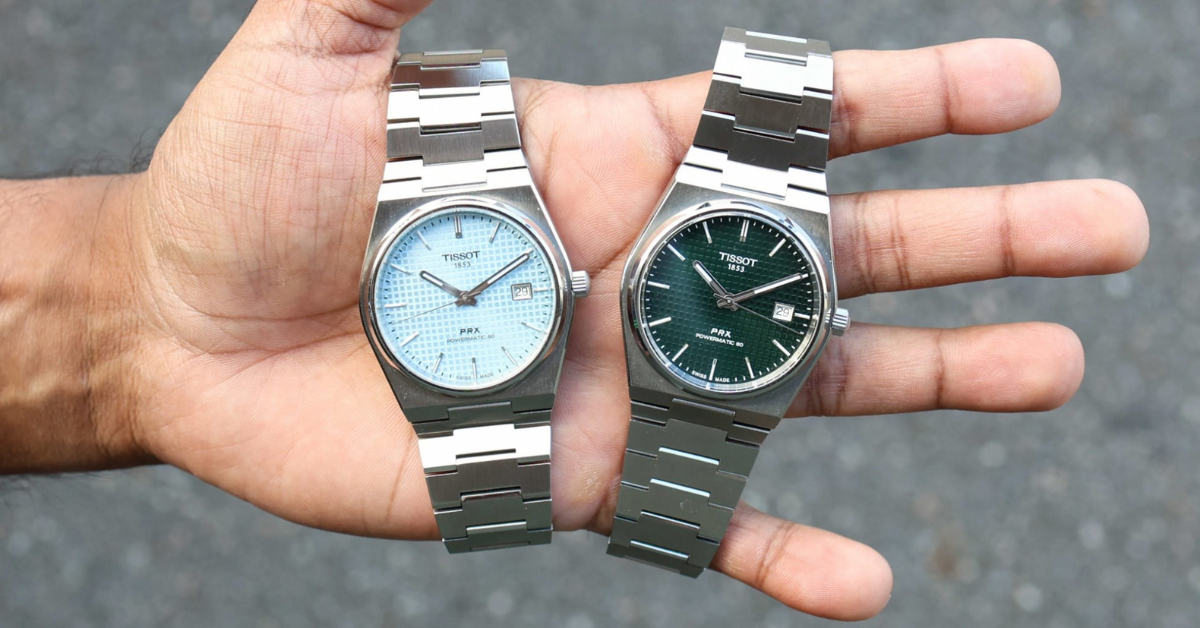
The watch made a return in a modern form many years later. Tissot took care to study the original model and then reintroduced it. Designers respected its heritage and sharpened the details. This stage represents the well known tissot prx reissue. The brand introduced updated materials and better finishing. The size was maintained close to the original proportions.
The modern release was soon noticed by the watch community. The design was discovered by new buyers. Long-time collectors welcomed its return. The revival demonstrated the power of classic ideas to stand the test of time. It also proved that careful redesign can help to preserve authenticity.
Materials and Movement Enhancements Over Time
In the modern versions, new movement options were introduced. Quartz accuracy or automatic mechanical performance was available to buyers. This flexibility made the model more attractive. Case finishing also improved. The brushed surfaces appeared sharper and more refined. The construction of the bracelet also felt stronger than previous versions.
These upgrades played an important role in the Tissot PRX evolution. With them, they helped the watch to compete with many modern sports luxury designs. The revised models were a balance of heritage and innovation. This balance made them appealing to many kinds of people.
Why the Integrated Bracelet Still Matters Today
The integrated bracelet is the defining feature of the watch to this day. It is connected to the case itself without any visible gaps. This way of design creates a smooth visual flow. This is a detail that many watch collectors appreciate. It reflects good craftsmanship and philosophical engineering. In addition, the bracelet provides better comfort while wearing throughout the long day.
These characteristics were responsible for the enduring Tissot PRX background among the enthusiasts. The model still stands for practical grace rather than decoration alone. Modern buyers like that timeless approach. The watch is appropriate for office wear as well as for the weekend.
The Significance of the Model in the Modern Culture of Watchmaking
The Tissot PRX Watch has an important place in the contemporary conversation about watches. It provides a good value when compared to many integrated bracelet competitors. It is often recommended by collectors as a way to get started in Swiss watch collecting. Its design history gives it emotional value in ownership.
Social media also helped to increase its popularity. Watch communities often share ideas for styling and also comparisons. These conversations help to sustain interest in the model. The watch now serves as a bridge between the heritage design and contemporary expectations.
Final Words
The story behind the Tissot PRX Watch under $500 demonstrates how great care in design can make it survive changing trends. Its origins in 1978 formed a lasting identity that is still relevant.
Modern versions show respect to the past, but enhance performance and finishing. This careful balance makes the model appealing to collectors all over the world. Few watches can retain both a historic and a practical existence. This one is still managing that balance successfully.
Frequently Asked Questions
When was the Tissot PRX first introduced?
The original model came out in 1978. It launched a slender case and an integrated bracelet design.
Is Tissot PRX suitable for daily wear?
Yes. Its stainless steel case and sapphire crystal are supports of its reliable everyday use.
Why is Tissot PRX so popular again today?
Its classic design made a modern reappearance. Its heritage and comfort are appreciated by collectors.